Geometry

Math is one of the foundational subjects in school that many students either hate or love. Here at TEEN DAY, teachers like Amanda Gray are pushing boundaries and encouraging students to see the subject in a new, refreshing light. One that isn’t so scary.

In her class, students are learning proofs and puzzle-solving. They’re doing parallel line proofs, congruent triangles, properties of triangles, and coordinate geometry. While there is still a good amount of calculator usage in geometry, it can be a big shift for students because it’s no longer about getting an answer, but rather knowing and explaining how that answer is true.

“She’s a good teacher— she explains things well and is very helpful with classwork and also makes it fun.” – Eloise L.
Screenshot

Classes are structured so that students get a mix of lecture, group work, class discussion, individual practice, and sharing. The mix of formats leads to various conversations of approaches to a problem or proof. Students can see things from multiple perspectives and can benefit from hearing how other people approach or see the same problem. Students are sharpening their individual critical thinking skills as well as building their confidence when asked to share aloud.

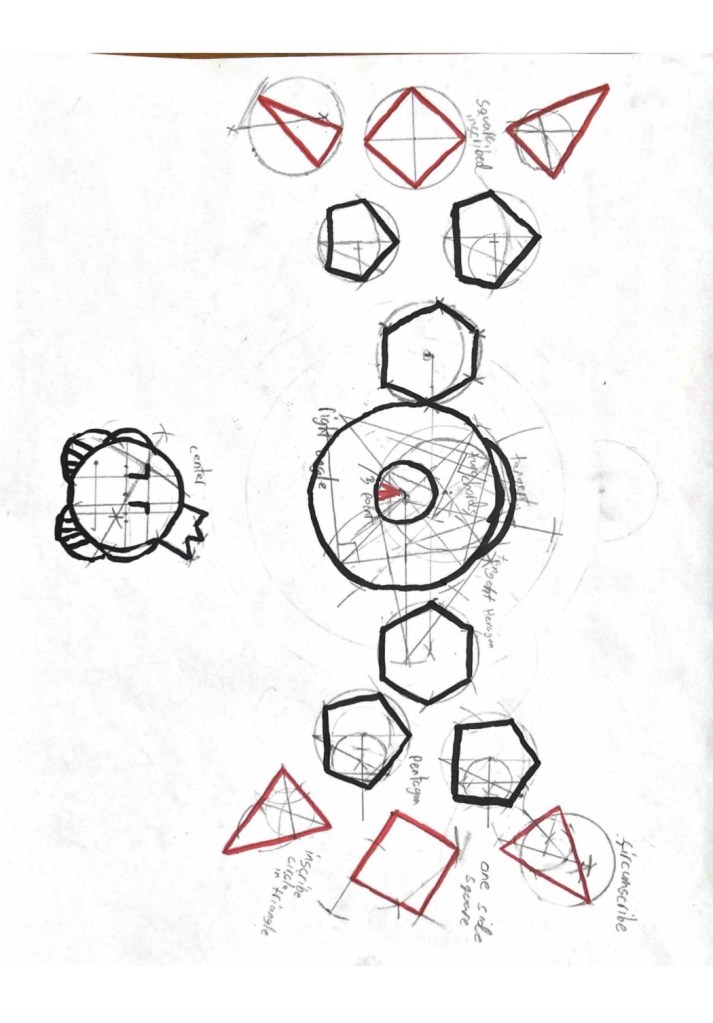
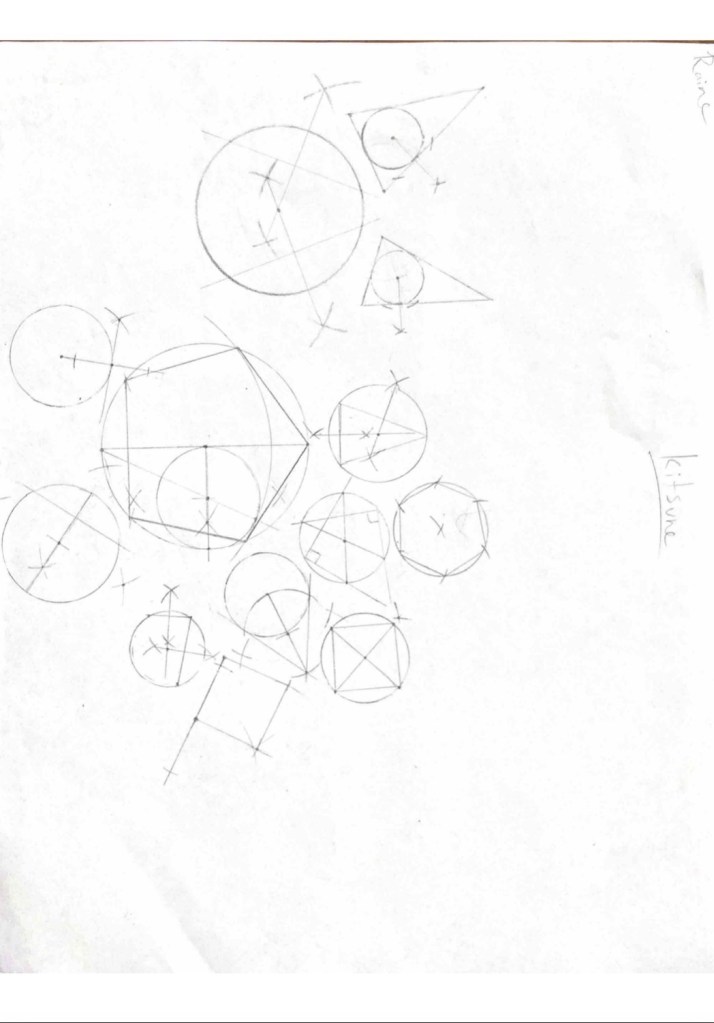
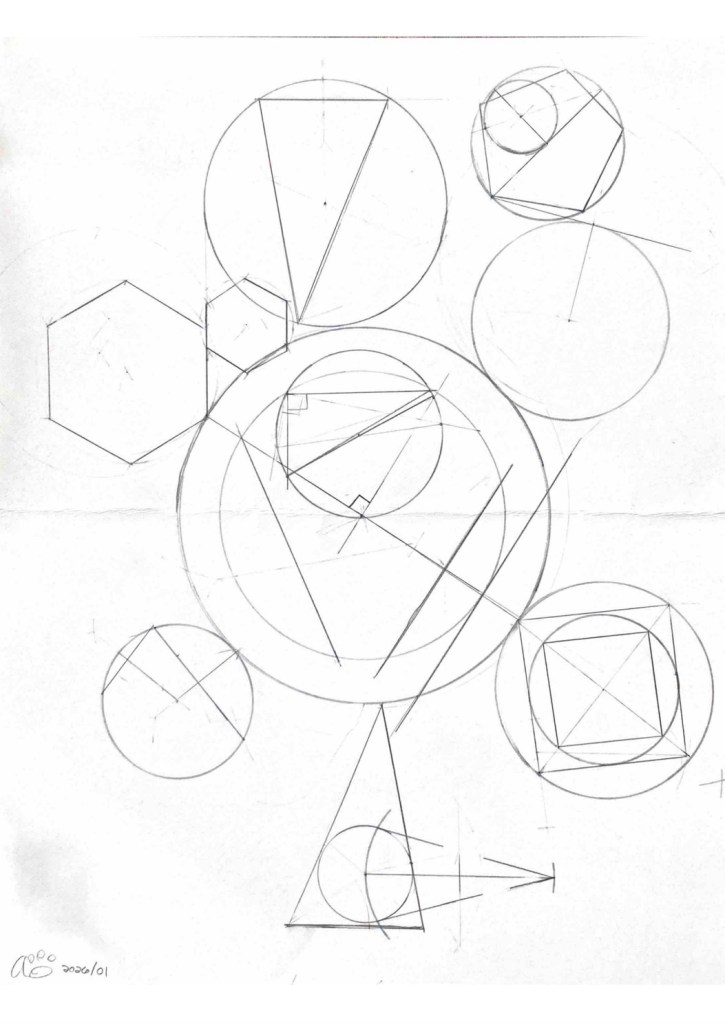
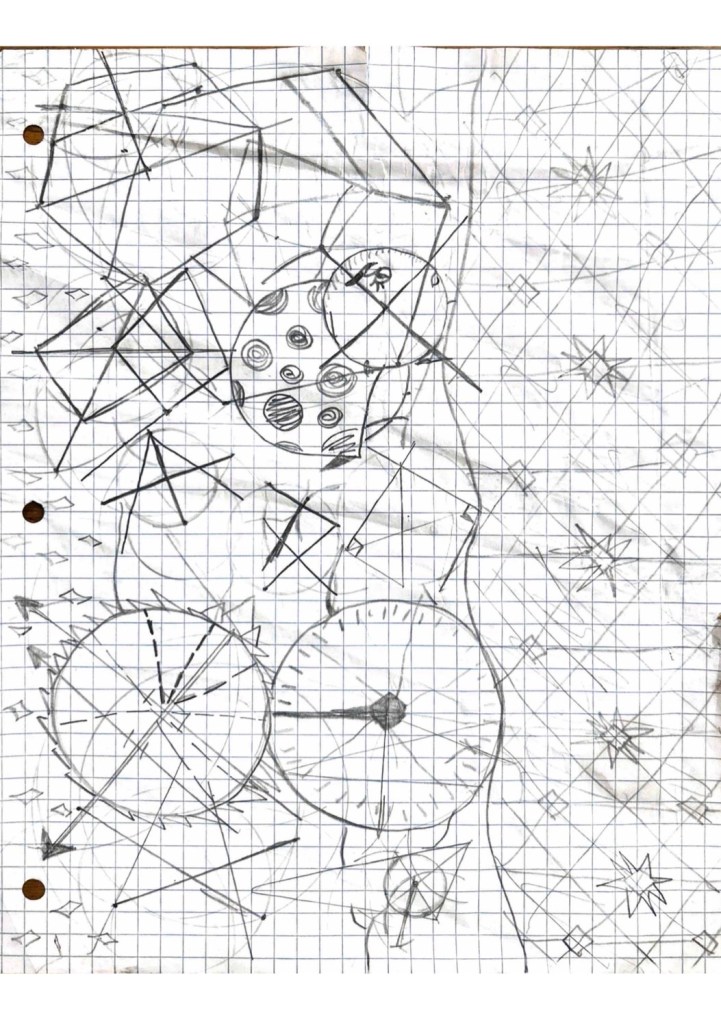
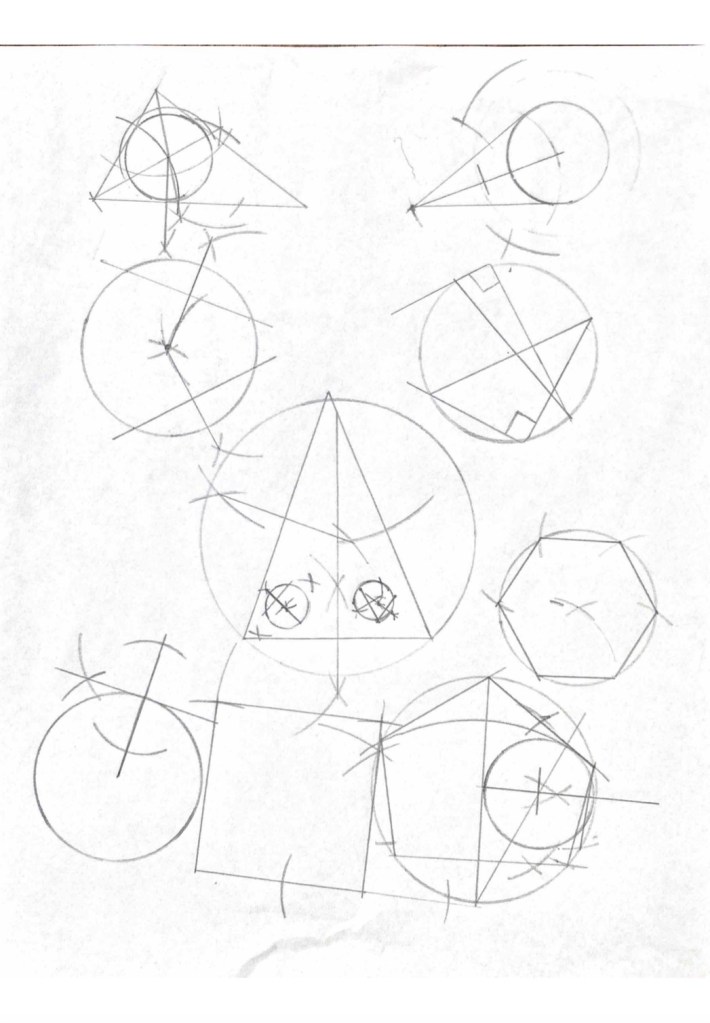
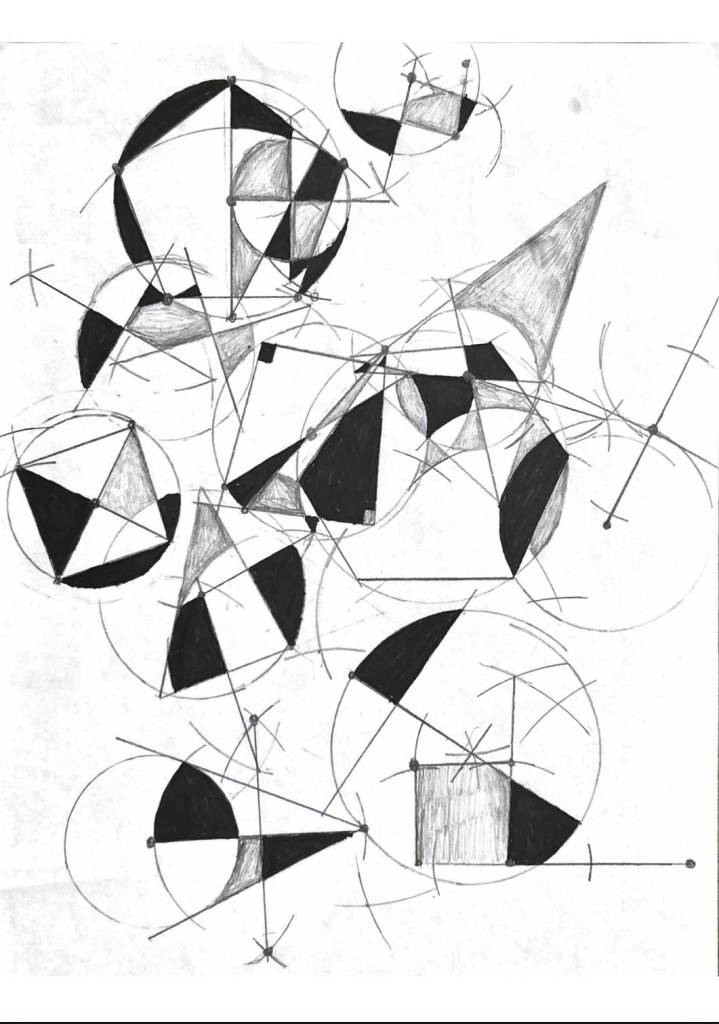
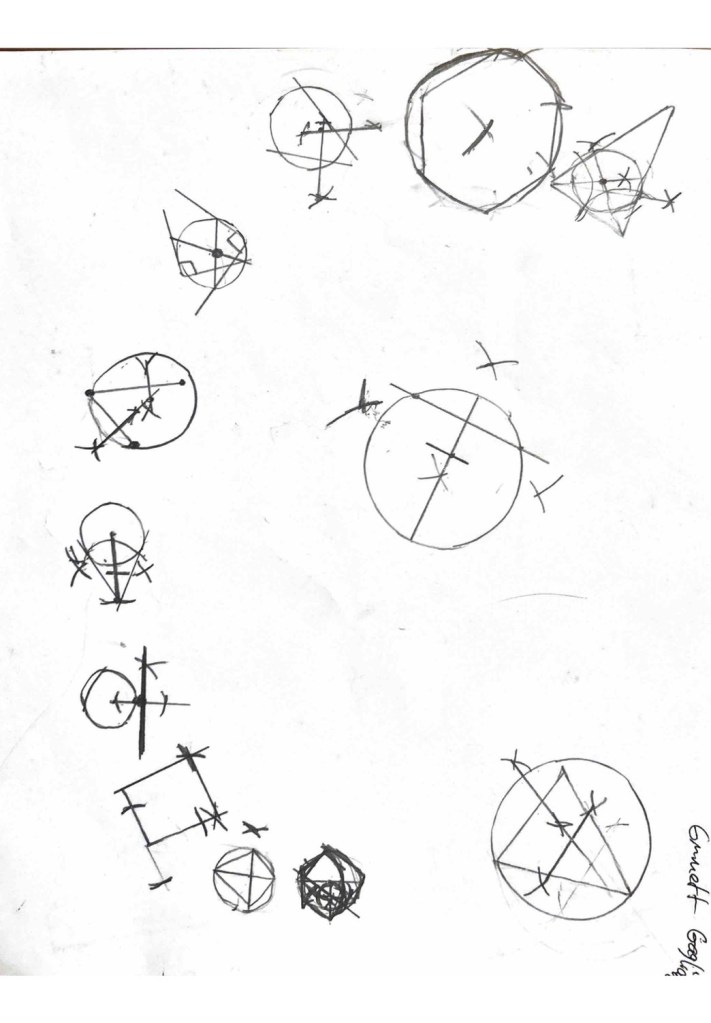
Additionally, students are applying what they’re learning in the classroom to real-world things. Over winter break, the students were asked to complete a “construction art project,” a collection of geometric shapes that were turned into artwork. Geometry doesn’t have to solely be about theorems and proofs, and instead can be used for various, fun designs. (See picture to the left and more pictures below.)

“…Amanda always makes math fun to learn. As someone who isn’t super math oriented, I’ve found that throughout algebra and geometry, Amanda has made the learning process quite a lot better than other experiences I’ve had.” – Addi F-W

Amanda Gray really enjoys math and science and works at Tompkins Cortland Community College (TC3) as a tutor in those subjects. In her free time, she works with TEEN DAY to provide excellent instruction on a wide range of subjects within the math and science fields. She wants to share her love of math with her students and help them to see the joy in the subject.

Overall, students are thriving in this collaborative setting and enjoying what they’re learning. Amanda’s instruction goes beyond that of the traditional classroom, with students sitting quietly in their seats, memorizing steps. But rather, her teaching style engages the students critically in the various stages of a problem, creating a unique and welcoming environment.

“It’s a classroom where students aren’t just doing geometry, they’re talking it through, questioning it, and starting to think like real mathematicians.” – Amanda Gray

Geometry is a part of a three-year rotation for lower-level math. First, Algebra I is offered, then Geometry, and finally Algebra II (which has a dual enrollment option). In 2026-2027, Algebra II will be offered, and the year after that, the cycle will reset, starting with Algebra I.
Reacting to the Past: The July Crisis

The year is 1914, and war is imminent. Archduke Franz Ferdinand was just assassinated, and the complex web of alliances brought Europe and the rest of the world into the First World War.

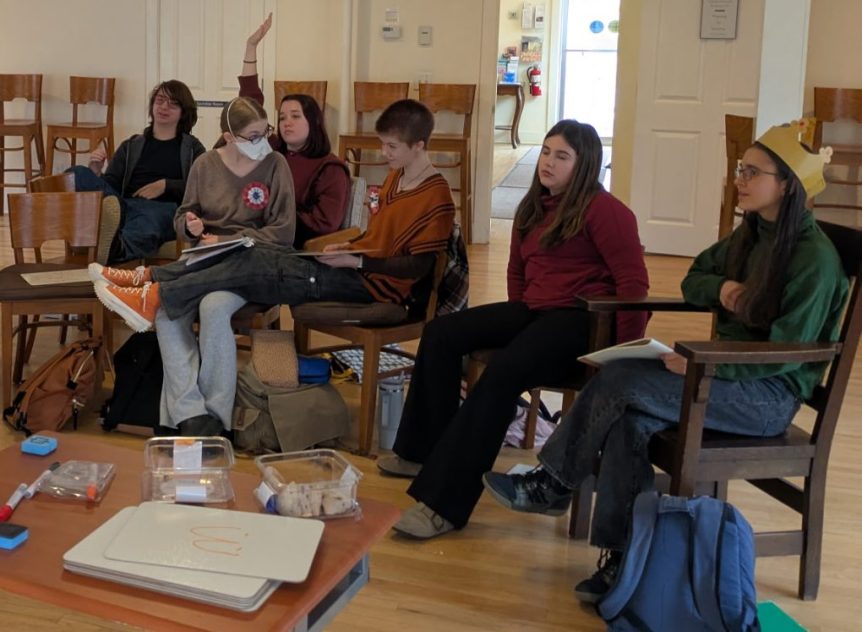
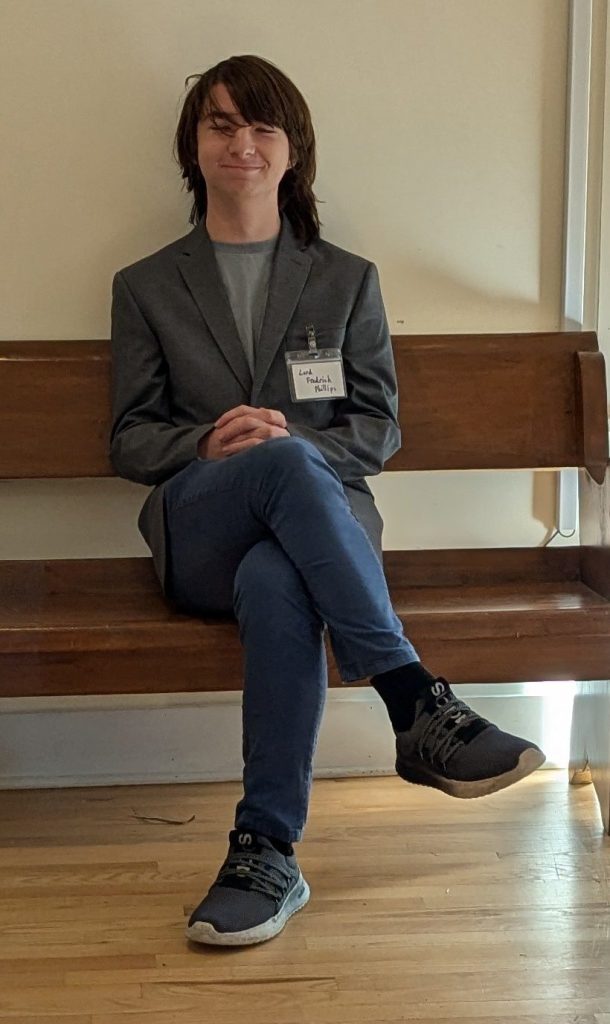
In this unconventional class, students will take an active part in their learning. They will be tasked with role-playing key historic figures in charge of important, world-altering decisions. Students will research and gain an understanding of historical issues and their nuances. The goal of this class is not to recreate the past, but rather to explore the complexities of human nature and gain an understanding of both historical and contemporary political figures.

“These are games, but they are also spaces for learning.” – Mike Timonin, Instructor

The course is set up so that the students will have a few days in class to discuss readings and research background information. Then, characters are assigned, the scenario is set, and the fun begins. This year, the class will be covering the beginnings of World War I. Over the next several classes, the scenario will play out while the instructor, Mike Timonin, introduces interesting and complex variables. While he will be overseeing the course, it is student-led and directed, meaning students actively shape their own education.

Mike Timonin is a professor at Tompkins Cortland Community College as well as a long-time TEEN DAY instructor…and he’s super enthusiastic about history. About ten years ago, he attended the conference of the American Historical Association. There were several guest speakers there, including Mark Carnes, the person who created the Reacting to the Past (RTTP) curriculum. About five years after that, Mike introduced RTTP to his class for the first time. Since then, he has learned a lot from these classes and believes TEEN DAY has a unique setup that is perfect for a class like this. Students are able to devote an entire semester to one topic rather than jumping quickly between various topics. This allows students to better grasp the complexities of life during these times and deepens their understanding of historical events.

“My favorite thing about the course is how deeply you dive into the subject. […] I’ve never actually understood what happened to anywhere near the level I do with RTTP.” Lonny E.

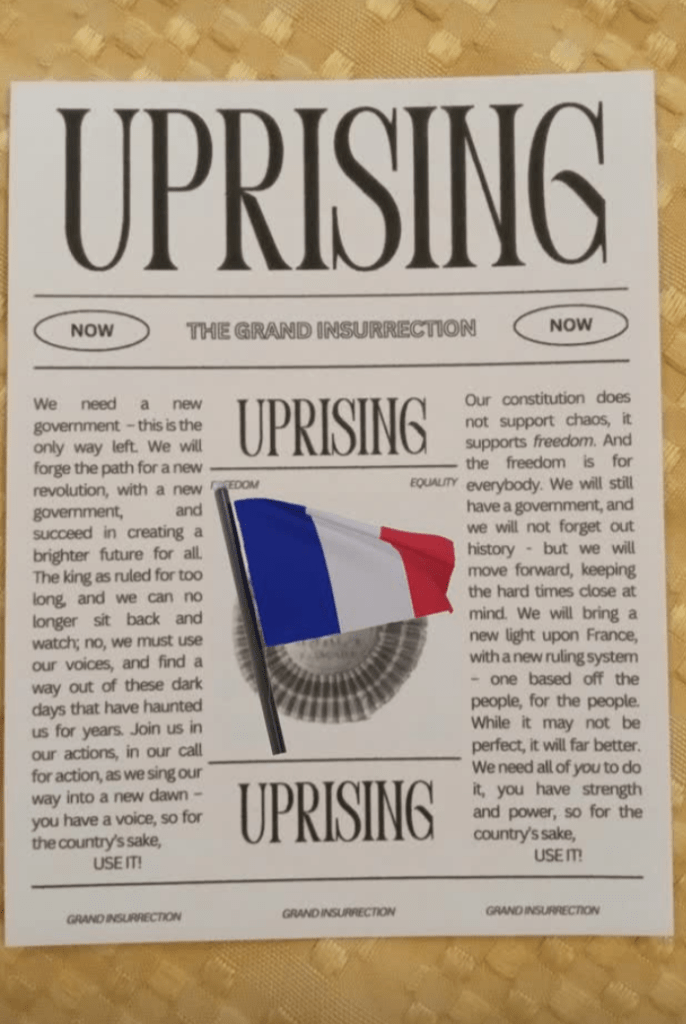
In previous classes, students covered the American and French Revolutions. In this, they were able to explore their creativity through scenarios such as hiding “tea”, stealing votes, and blackmail. There are so many options, especially with WWI.

“Personally, my favorite part of it all was the amount of creative liberties I got to take in the class with the roles and ‘powers’ that were given to me.” Logan

The first day of classes for RTTP is January 15 and there are still slots available. Email admin@teendayithaca.org for registration info.

TEEN DAY Ithaca Has Its First Fiber Arts Class!

post by Kaci E., TEEN DAY Intern

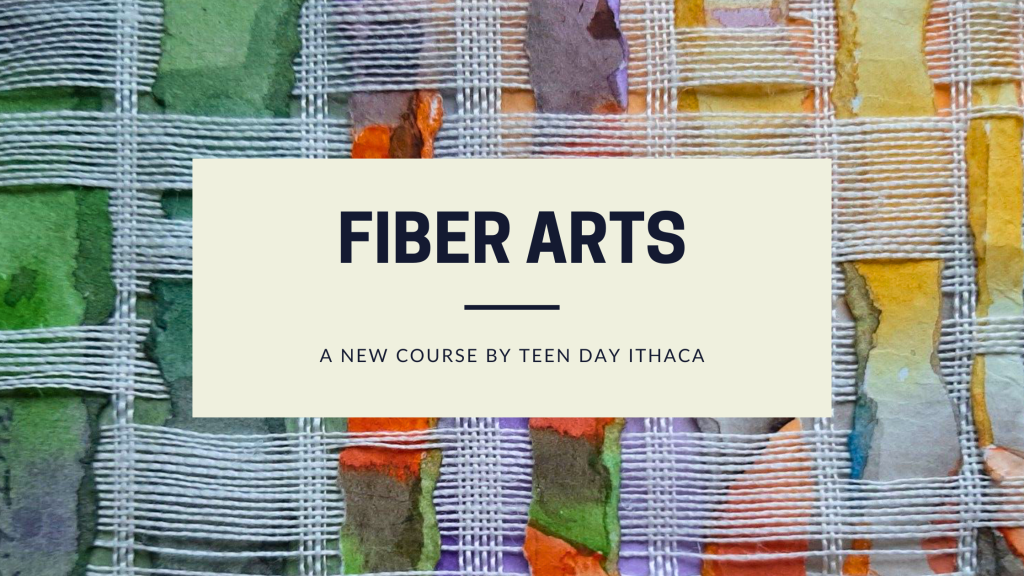
Fiber arts covers a large spectrum of disciplines, focusing on the materials used, such as yarn or fabric. The new class at TEEN DAY Ithaca is covering five different units: embroidery, weaving, crochet, knitting, and macramé. Each has its own distinct tools, traditions, and skills, which encourages students to learn how to read patterns, improve their hand-eye coordination, and cultivate their creativity!

Charlotte Albunio, a PhD student in mechanical engineering at Cornell University, is teaching this class. She believes in recognizing the medium of fiber arts as just that, an art, not to be dismissed as a craft or women’s work, as it has been traditionally. In this class, she hopes students are learning and understanding the historical nuances of fiber arts and can express themself through their work.

“Taking Charlotte’s fiber arts class has been one of the most rewarding art classes I’ve taken.” — Aaren S.

Until recently, the participants have learned how to embroider and weave. For the embroidery unit, students were instructed on the basic stitches, how they form different shapes and textures, how to read the stitches’ abbreviations (this allows them to follow along with patterns), and were allowed to choose between six different patterns to complete with the help of the instructor when needed.

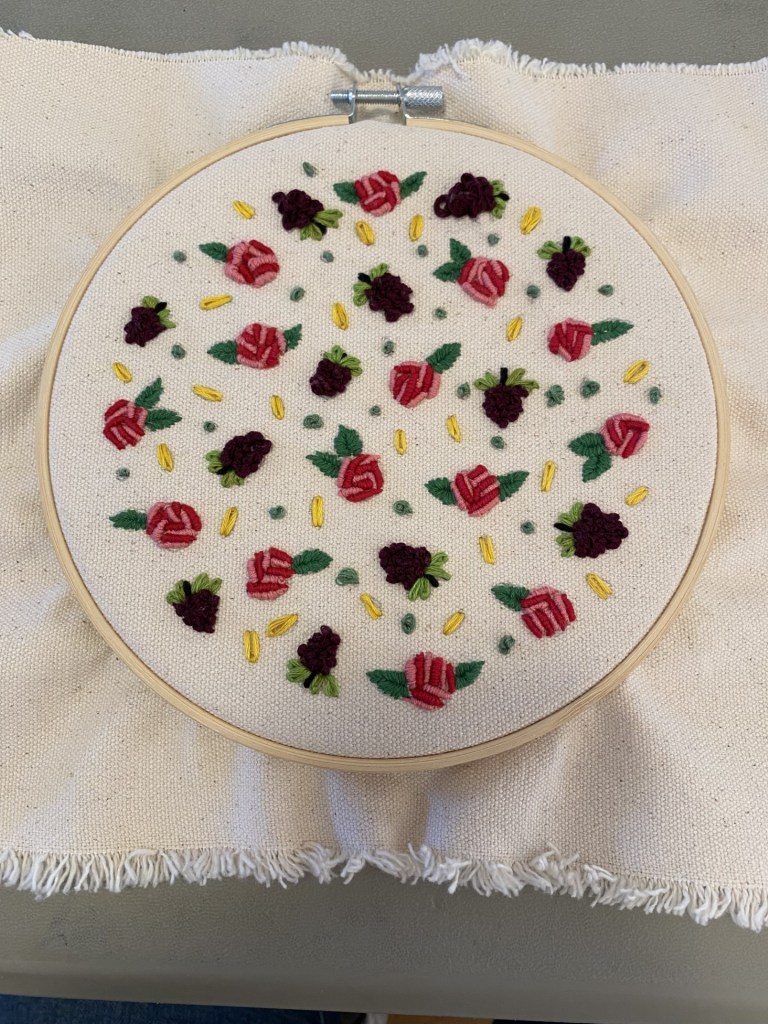
This photo was sent to me by Juliet A., a student in the class. The image depicts the hoop, fabric, and various stitches used when embroidering. The hoop holds the fabric taught, which allows for better stitch definition and an easier time embroidering. Many projects can be completed with these stitches, although there are more.

“Embroidery has been my favorite so far—it makes me feel like I’m in a Jane Austen book!”— Juliet A.

In addition to the embroidery unit, students focused their efforts on weaving. They were instructed to make their own looms with cardboard and wooden dowels, materials many people already have on hand. Fiber arts can be very expensive, so it’s important to emphasize that it doesn’t always have to be. If you are interested in fiber arts, there are often cheaper alternatives.

In this unit, students were instructed on the basic stitches to prepare them for their personal projects, much like the embroidery unit. For their personal projects, participants were instructed to create a small bag. They chose their own yarn, colors, and stitch design.

The image on the left depicts the tabby and the soumak stitch. The former stitch is the most basic and consists of weaving the yarn back and forth. The latter stitch is made up of looping the weft threads over the warp threads (the weft thread is the working yarn, and the warp threads are the vertical threads). The result of this technique is the braid-like appearance.

The image above depicts a complete embroidery piece. This is one of the patterns students could follow after they learned the basic stitches.

These projects were wrapped up in the past weeks, and the students have started on their next unit: crochet. Once this unit, as well as macramé and knitting, are complete, students will enter the second half of the year and focus more on a large-scale work combining all the skills they have learned. Students are creating wearable pieces, mixed-media self-portraits, and a cumulative studio project. In this final project, students are designing their own patterns and creating a piece that represents their personal vision as a “thesis.”

“The structure is designed to empower students to use fiber arts as a mode of self-expression and identity, creating meaningful work that can be incorporated into their daily lives as something they wear, display, or gift.” — Charlotte A.

NOW HIRING: 2025-2026 Instructors

**Updated 5/7/2025**

TEEN DAY Ithaca is in the process of hiring teaching staff for 2025-2026, and we’d love to connect with YOU!

There is typically no demand for specific credentialing. Classes are/have been taught by professors, graduate students, undergraduate students, professionals, and enthusiasts of all stripes. We strive to find people who are, yes, comfortable in a room full of teens and confident in offering instruction on a subject. However, what we look for most of all are people who are passionate about what they’re doing. Whether it’s Algebra or Art, we’re after people who ware willing to share their excitement about a topic with our participants. Most of our courses are offered 1 day/week on Tuesdays or Thursdays. Contact admin@teendayithaca.org for more info or to apply.


LOWER-LEVEL SCIENCE INSTRUCTOR:

Most of our educational areas at TEEN DAY operate in a three-year rotation, allowing most participants to take most classes, regardless of when they enter the program. Our lower-level science rotation consists currently of Life Science and Physical Science, with Earth Science being an overlapping year between our upper-level science courses. (Though from a teaching perspective, Earth Science is included in our lower-level course rotation.)

The ideal candidate will move through this rotation each year, teaching the relevant coursework. There is ample support for lesson planning and some existing infrastructure for labs and course planning. There is a lot of room for creative interpretation and outside-the-box instruction in all areas. Instructor applications will also be accepted for next year’s Earth Science course without the intention of teaching for TEEN DAY for the full rotation.

For more detailed information about the position, course descriptions, relevant requirements, and compensation, visit https://teendayithaca.org/lower-level-science-instructor/.

NOW HIRING: Instructors

**UPDATED July 17, 2024**

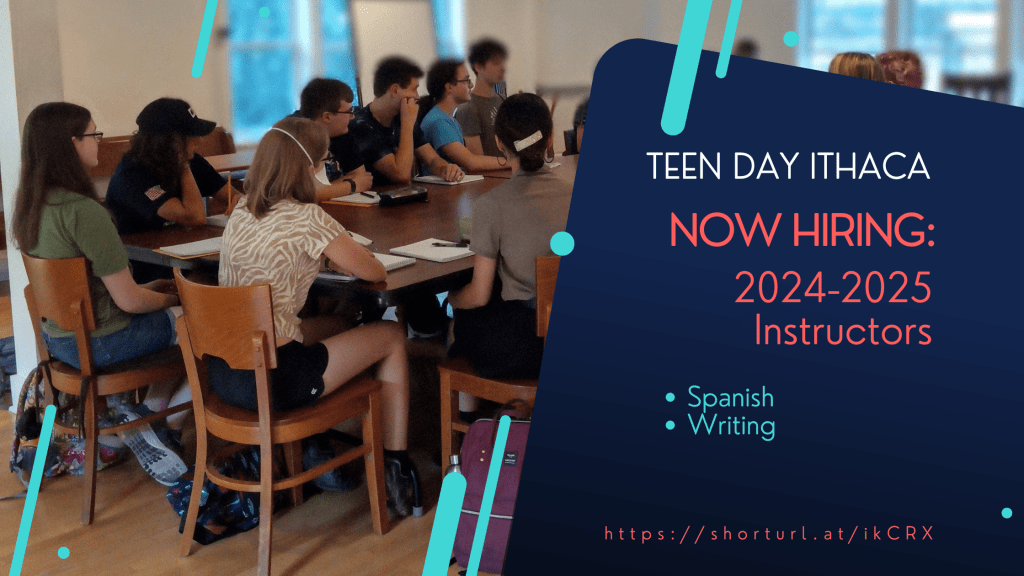
TEEN DAY Ithaca is in the process of hiring teaching staff for 2024-2025, and we’d love to connect with YOU!

There is typically no demand for specific credentialing. Classes are/have been taught by professors, graduate students, undergraduate students, professionals, and enthusiasts of all stripes. We strive to find people who are, yes, comfortable in a room full of teens and confident in offering instruction on a subject. However, what we look for most of all are people who are passionate about what they’re doing. Whether it’s Algebra or Art, we’re after people who ware willing to share their excitement about a topic with our participants. Most of our courses are offered 1 day/week on Tuesdays or Thursdays. Contact admin@teendayithaca.org for more info or to apply.


SPANISH INSTUCTOR:

We offer three levels of Spanish language courses at TEEN DAY. At present, courses utilize the Español ¡En Vivo! Instructional Spanish Workbooks for grades 9-12 as a framework for the course; however, instructors preferring a different curriculum for the course(s) are invited to suggest other options when applying.

The ideal candidate will move through this rotation each year, teaching the relevant coursework. There is a lot of room for creative interpretation and outside-the-box instruction in all areas. Instructor applications will also be accepted for next year’s Spanish III course without the intention of teaching for TEEN DAY for the full rotation.

For more detailed information about the position, course descriptions, relevant requirements, and compensation, visit https://teendayithaca.org/job-description-spanish-instructor/.


WRITING INSTRUCTOR:

TEEN DAY is a homeschool enrichment program for 12 and ups. A full day of classes is offered on Tuesdays between 9am and 3:30pm. Classes are available a la carte on Thursdays. You can find out more on the website: http://teendayithaca.org.

Classes are/have been taught by professors, graduate students, undergraduate students, professionals, and enthusiasts of all stripes. We strive to find people who are, yes, comfortable in a room full of teens and confident in offering instruction on a subject. However, what we look for most of all are people who are passionate about what they’re doing. Whether it’s Algebra or Art, we’re after people who ware willing to share their excitement about a topic with our participants. For dual enrollment purposes, this role requires a Master’s degree in English, English Education, Composition/Rhetoric or a related degree. Candidates with related degrees must have at least 18 credits of English at the graduate level. Most of our courses are offered 1 day/week on Tuesdays or Thursdays. Academic Writing is offered 2 days/week on Tuesdays AND Thursdays.

Most of our educational areas at TEEN DAY operate in a three-year rotation, allowing most participants to take most classes, regardless of when they enter the program. Our writing rotation consists currently of Academic Writing (dual enrollment w/ Tompkins Cortland Community College; TWO days/week), Creative Writing, and Journalism.

The ideal candidate will move through this rotation each year, teaching the relevant coursework. There is a lot of room for creative interpretation and outside-the-box instruction in all areas. Instructor applications will also be accepted for next year’s Academic Writing course without the intention of teaching for TEEN DAY for the full rotation.

For more detailed information about the position, course descriptions, relevant requirements, and compensation, visit https://teendayithaca.org/job-description-writing-instructor/.