Economics

Pat Sewell, an adjunct associate professor at TC3 and member of Ithaca’s Common Council, is teaching the class on economics (dual enrollment offered through TC3 for those who wish to earn college credit). He received his M.A. from the University of North Texas in moral attitudes and sustainable decision making. He also specializes in ethics, economics, and public policy. His work regularly involves the intersection of these subjects, so it is no surprise that Pat teaches students about these interconnecting topics and all the other various topics related to economics.

“I love economics as a discipline because it is a beautiful tool for understanding human behavior, understanding society writ large, and ultimately thinking about why we have organized our lives the way that we have.” – Pat Sewell

To understand the connection between these topics, one must first understand the different levels of economics: economics is often split into macroeconomics and microeconomics. The latter deals with supply & demand, labor & resource allocation, price determinants, and the market. The former deals with what money is, the Federal Reserve, inflation, tariffs, and all the parts that make up the economy.

Previously, the class has looked into microeconomics, and currently, they are tackling macroeconomics. They’ve covered topics such as the law of diminishing marginal utility & returns, labor markets, financial markets, rival and non-rival goods, monopolies, poverty, inflation, and so much more. Currently, they’re trying to answer the question of: “What is money?”

The class is set up to be done mostly through lecture. Each day there is homework and an assigned reading, and every other week there is a quiz. This provides consistency and predictability. This way, students can better understand what is expected of them on the various assignments.

“[Pat’s] knowledge and love of the subject is eminent, and his engaging and conversational teaching style, along with the usually lively participation of the class has made this class an enjoyable, educational, and enriching space.” – Eliza L.

Though this class is mostly a lecture-based class, there are occasions where students can participate in games. The study of economics lends itself to gamification, which can help students better understand its concepts. Recently, students took part of a bartering game where they could see the importance of money in facilitating our modern world. Another game involved the difference in the number of suppliers and consumers. They got to see firsthand what happens when there are more suppliers than consumers, when there are more consumers than suppliers, and when there is an equilibrium of distribution.

In this class, students are learning the basic principles of economics and, moving forward, will be able to apply them to their everyday lives.

TEEN DAY Ithaca’s First CAD Class!

post by Kaci E., TEEN DAY Intern

Computer Aided Design, or CAD for short, is an online program used to create real-world objects based on one’s own imagination. Anything can be created in a virtual space, and with the help of a 3D printer, it can be brought to life (so to speak). CAD is used by many different professions, such as engineering, medical, architecture, and video game designers, but one doesn’t need to use it in a professional setting. Many people use CAD from their personal computers for their own enjoyment and personal interest. CAD is a practical, multi-disciplinary program that merges creativity with ease, resulting in something that you can hold in your own hands at the end of the process.

There are many different versions of CAD, but this class only uses FreeCAD. As you may have guessed, this version of CAD is free, but it still has many features and is easy to use. Additionally, many of the skills students are learning in FreeCAD are mostly transferable to other CAD programs. Even if students end up using a different version of CAD, they’ll already have a leg up in figuring out the software.

Ronia D. rendered this model of a temple.

Brian Kardon, a neuroscience lab technician at Cornell University, teaches this class. He first discovered CAD in high school and has continued to use it for various projects since then. He often designs and builds experimental equipment.

“Something about the combination of precision and creativity of CAD is really very engaging for me, and taking a physical object out of the printer that I designed in a virtual space still feels really exciting.” – Brian K.

In his class, he is teaching students to use FreeCAD and how that can work with 3D printing, a popular manufacturing tool. Not only do students learn a cool program and its applications, but their basic computer skills are also being sharpened. Students are learning to navigate a file system, common UI motifs, keyboard shortcuts, organizing/switching windows, and so much more. Students’ technological literacy is skyrocketing!

“It [referring to the class structure] is open-ended enough to explore the software independently while still having plenty of guidance and support.” – Orion M.

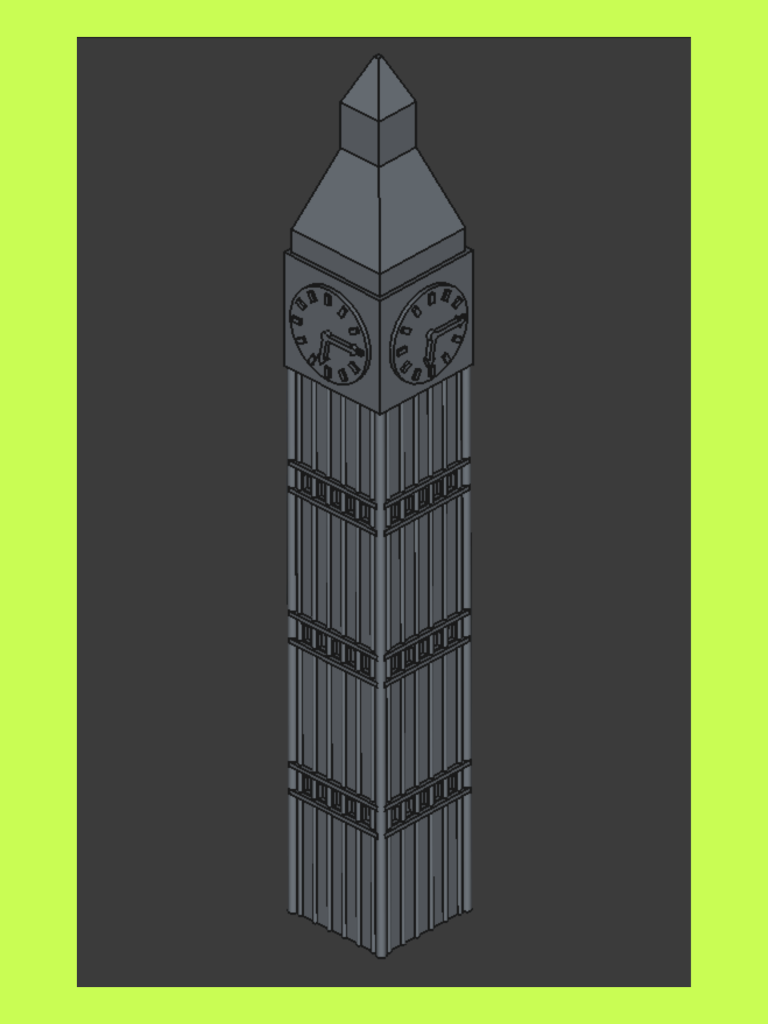
Orion M. has designed the Big Ben clock as his personal project.

Each class, Brian demonstrates how to use a new tool or process, then works with students to create a model together. Students are then tasked with creating another model using the tool they just learned, as Brian offers help as needed. The rest of the class is devoted to their personal projects.

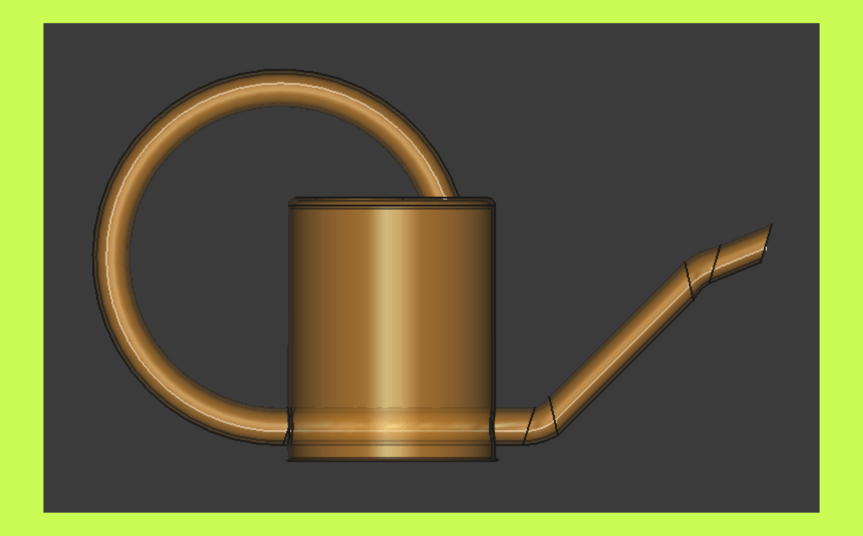
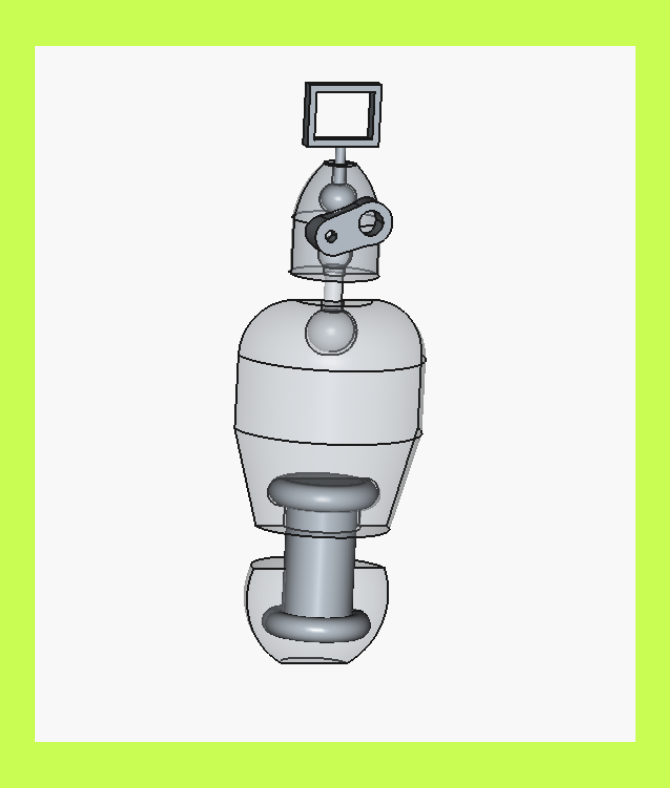
Throughout this course, students are challenged to create their own personal project, which will ultimately be 3D printed at the Tompkins County Public Library makerspace in December. They will do this again at the end of the school year for their second personal project. This is an open-ended project with the only limitation of one’s own imagination. Some students are designing headphone stands, model guitars, or landmark buildings like the image to the left. Overall, Brian hopes students fall in love with the process of designing and printing something that came from their own minds.

“I think the CAD is nice and I’ll likely use the stuff I learned once the class is over to make more fun things.” – Ronia D.

Reacting to the Past: The July Crisis

The year is 1914, and war is imminent. Archduke Franz Ferdinand was just assassinated, and the complex web of alliances brought Europe and the rest of the world into the First World War.

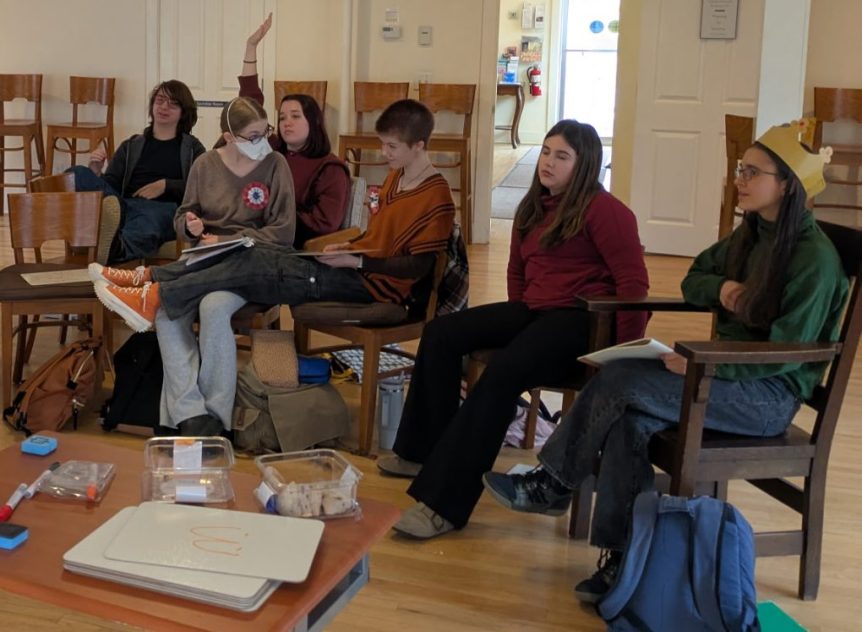
In this unconventional class, students will take an active part in their learning. They will be tasked with role-playing key historic figures in charge of important, world-altering decisions. Students will research and gain an understanding of historical issues and their nuances. The goal of this class is not to recreate the past, but rather to explore the complexities of human nature and gain an understanding of both historical and contemporary political figures.

“These are games, but they are also spaces for learning.” – Mike Timonin, Instructor

The course is set up so that the students will have a few days in class to discuss readings and research background information. Then, characters are assigned, the scenario is set, and the fun begins. This year, the class will be covering the beginnings of World War I. Over the next several classes, the scenario will play out while the instructor, Mike Timonin, introduces interesting and complex variables. While he will be overseeing the course, it is student-led and directed, meaning students actively shape their own education.

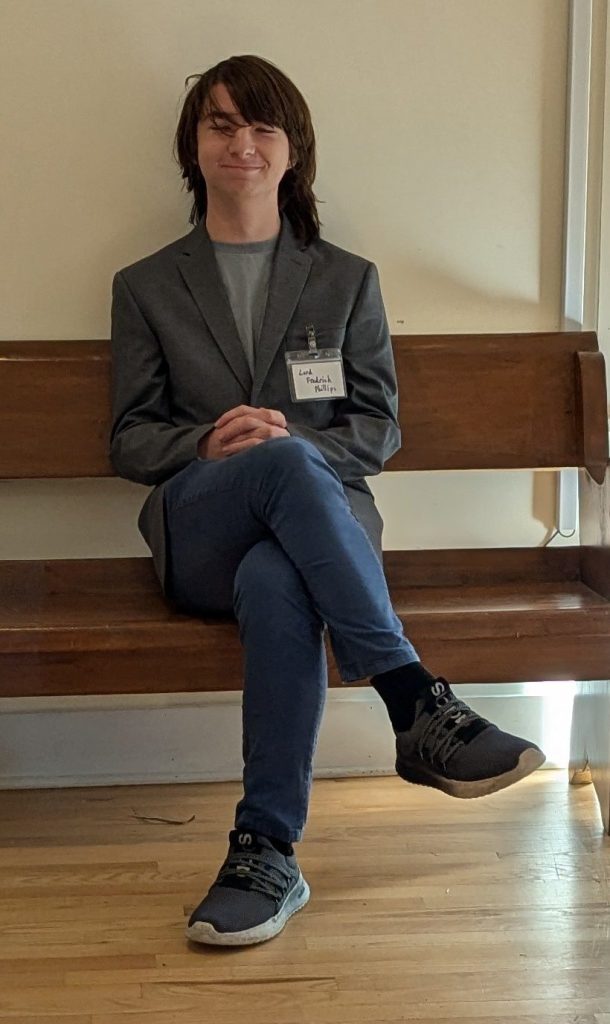
Mike Timonin is a professor at Tompkins Cortland Community College as well as a long-time TEEN DAY instructor…and he’s super enthusiastic about history. About ten years ago, he attended the conference of the American Historical Association. There were several guest speakers there, including Mark Carnes, the person who created the Reacting to the Past (RTTP) curriculum. About five years after that, Mike introduced RTTP to his class for the first time. Since then, he has learned a lot from these classes and believes TEEN DAY has a unique setup that is perfect for a class like this. Students are able to devote an entire semester to one topic rather than jumping quickly between various topics. This allows students to better grasp the complexities of life during these times and deepens their understanding of historical events.

“My favorite thing about the course is how deeply you dive into the subject. […] I’ve never actually understood what happened to anywhere near the level I do with RTTP.” Lonny E.

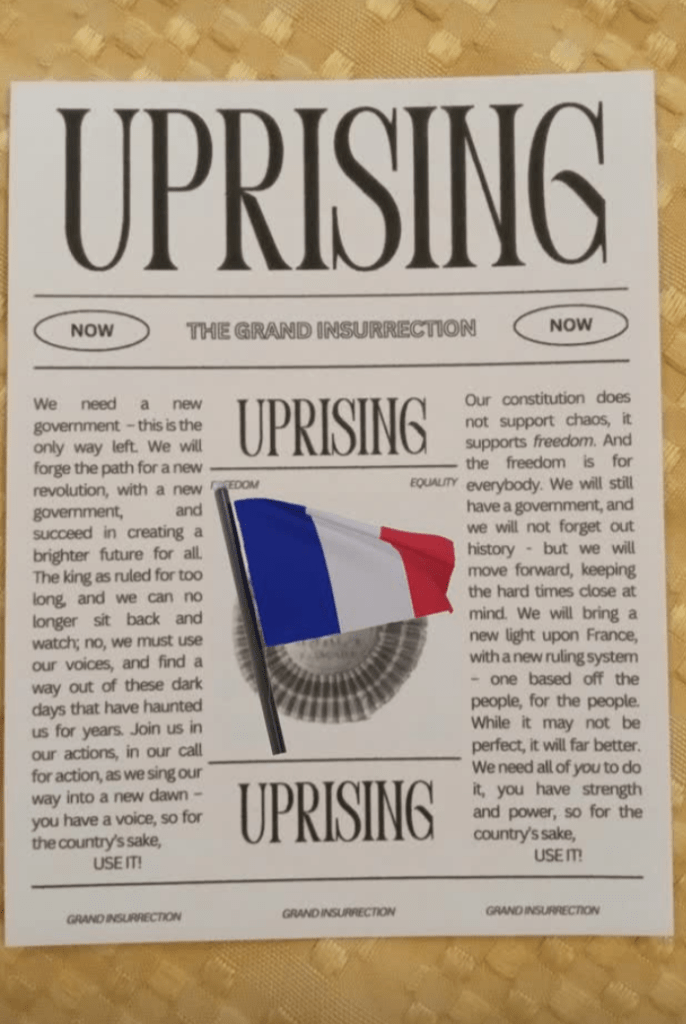
In previous classes, students covered the American and French Revolutions. In this, they were able to explore their creativity through scenarios such as hiding “tea”, stealing votes, and blackmail. There are so many options, especially with WWI.

“Personally, my favorite part of it all was the amount of creative liberties I got to take in the class with the roles and ‘powers’ that were given to me.” Logan

The first day of classes for RTTP is January 15 and there are still slots available. Email admin@teendayithaca.org for registration info.