Economics

Pat Sewell, an adjunct associate professor at TC3 and member of Ithaca’s Common Council, is teaching the class on economics (dual enrollment offered through TC3 for those who wish to earn college credit). He received his M.A. from the University of North Texas in moral attitudes and sustainable decision making. He also specializes in ethics, economics, and public policy. His work regularly involves the intersection of these subjects, so it is no surprise that Pat teaches students about these interconnecting topics and all the other various topics related to economics.
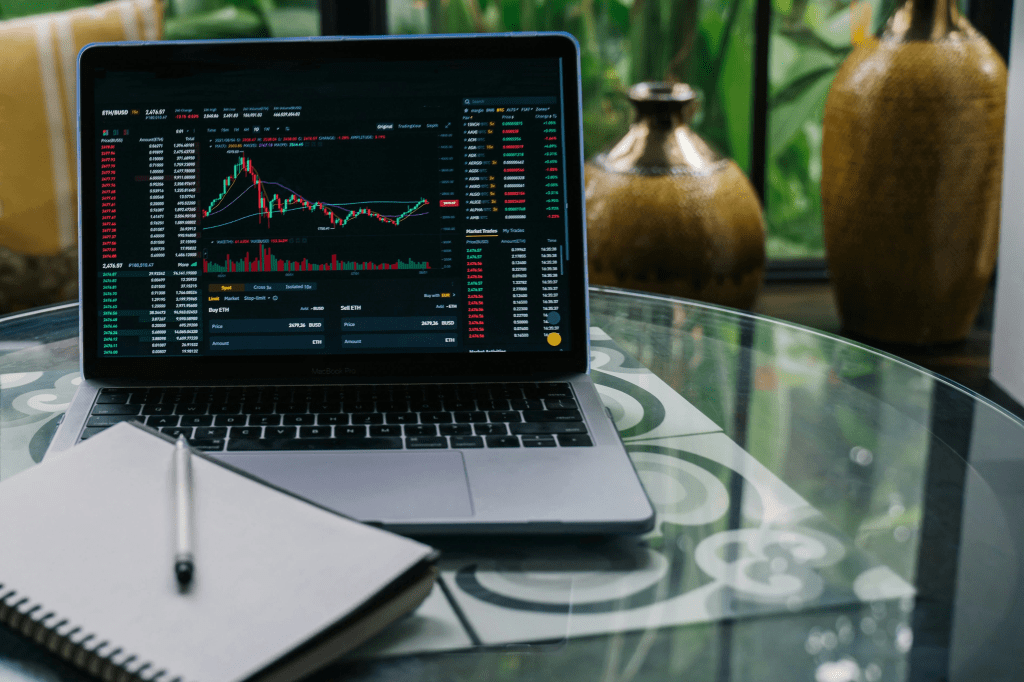
“I love economics as a discipline because it is a beautiful tool for understanding human behavior, understanding society writ large, and ultimately thinking about why we have organized our lives the way that we have.” – Pat Sewell

To understand the connection between these topics, one must first understand the different levels of economics: economics is often split into macroeconomics and microeconomics. The latter deals with supply & demand, labor & resource allocation, price determinants, and the market. The former deals with what money is, the Federal Reserve, inflation, tariffs, and all the parts that make up the economy.

Previously, the class has looked into microeconomics, and currently, they are tackling macroeconomics. They’ve covered topics such as the law of diminishing marginal utility & returns, labor markets, financial markets, rival and non-rival goods, monopolies, poverty, inflation, and so much more. Currently, they’re trying to answer the question of: “What is money?”

The class is set up to be done mostly through lecture. Each day there is homework and an assigned reading, and every other week there is a quiz. This provides consistency and predictability. This way, students can better understand what is expected of them on the various assignments.

“[Pat’s] knowledge and love of the subject is eminent, and his engaging and conversational teaching style, along with the usually lively participation of the class has made this class an enjoyable, educational, and enriching space.” – Eliza L.

Though this class is mostly a lecture-based class, there are occasions where students can participate in games. The study of economics lends itself to gamification, which can help students better understand its concepts. Recently, students took part of a bartering game where they could see the importance of money in facilitating our modern world. Another game involved the difference in the number of suppliers and consumers. They got to see firsthand what happens when there are more suppliers than consumers, when there are more consumers than suppliers, and when there is an equilibrium of distribution.

In this class, students are learning the basic principles of economics and, moving forward, will be able to apply them to their everyday lives.
Calculus (Dual Enrollment Offered Through TC3)

Calculus is commonly known as the entry point for upper-level mathematics used in college and various jobs. It lays the foundational concepts used in many more advanced practices.

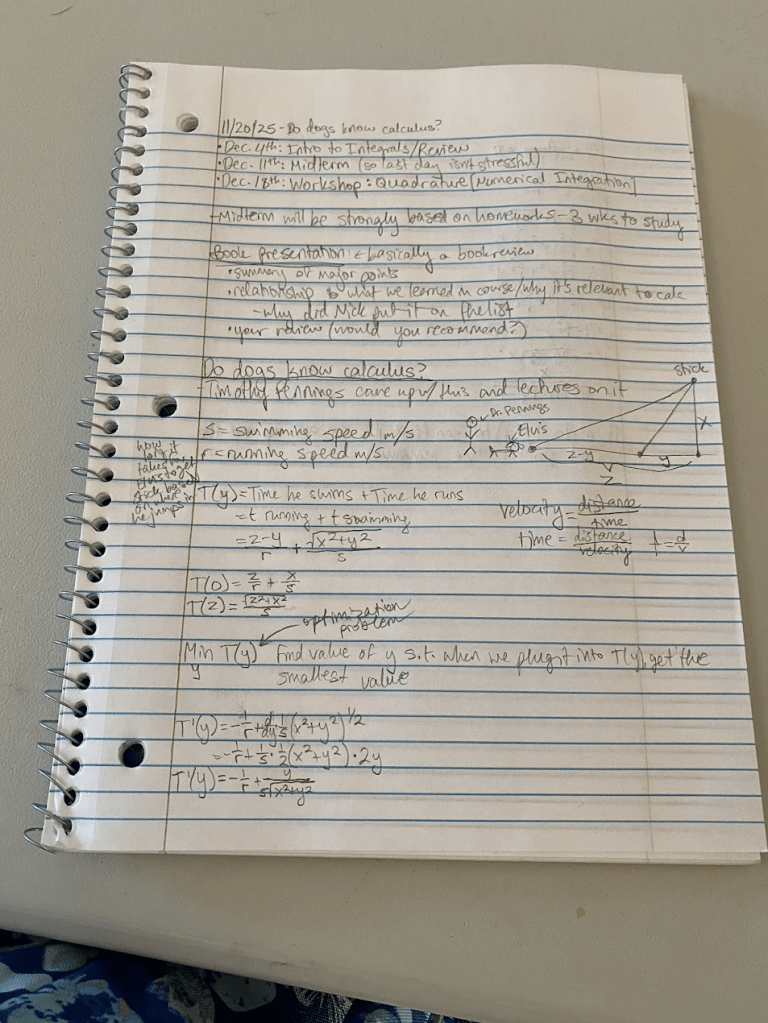
“I am a visual learner and Nick makes good use of the three (!!) whiteboards we have at Teen Day to show everything either written out or as a picture; I think that helps everyone in the class understand the material better.” – Juliet A.

At TEEN DAY, Calculus is offered as a dual enrollment course, meaning students may opt into earning college-level credits while simultaneously earning high school credits. If students choose this option, they may save time and money in the future, in addition to increasing their college readiness.

Regardless of a student’s decision to earn college-level credits, they’re receiving the same education as all other students in the class. In the first half of the course, students focused their efforts on derivatives— the rate of change of a function in relation to a variable. Currently, students are learning about integrals— a tool used to determine volumes, areas, and other quantities. The core principle of calculus is the connection between those two concepts.

Nick LaVigne, the instructor for this class, has a background in applied mathematics and currently works as a machine learning engineer at Ursa Space Systems. His work primarily focuses on Synthetic Aperture Radar satellite imagery. He is more than qualified to teach this course and get students interested in calculus.

“I’m trying to frame the course in a way that points to the wonder and beauty of mathematics rather than just a handful of problems to solve.” – Nick L.

“One fun thing is that during some classes we watched videos showing some interesting applications of what we’ve learned, and we also got to pick one math themed novel to read and write a book report about to present by the end of classes.” – Asher V.

He structures his classes so that students can work on interactive lectures, homework, quizzes, and various other workshops while at TEEN DAY. At home, he encourages students to explore and play around with online resources to understand complex subjects better, but doesn’t allow students to use these resources or a calculator on graded work, such as tests and quizzes. This also increases the accessibility of his class. Calculators (specifically, the TI-84) are expensive, and with access to more powerful tools online, there is no need to purchase one.

Lastly, it is important to note the math schedule at TEEN DAY. There are two distinct levels of math offered at a time. Each has a three-year rotation cycle. Calculus is part of the Upper-Level Math rotation and consists of Precalculus, Calculus, and Statistics (the latter two are offered for dual enrollment through Tompkins Cortland Community College). This year, Calculus is being offered, which means next year Statistics will be offered, and Precalculus the year after that.

Courses are offered in this way so that students have more academic options available to them. They’re not confined to a specific mathematical advancement, and can take the courses that make the most sense for them. Having a three-year cycle allows for more flexible scheduling. It also allows students to take two separate math classes at a time (an Upper- and Lower-level course), if they choose.