Calculus (Dual Enrollment Offered Through TC3)

Calculus is commonly known as the entry point for upper-level mathematics used in college and various jobs. It lays the foundational concepts used in many more advanced practices.
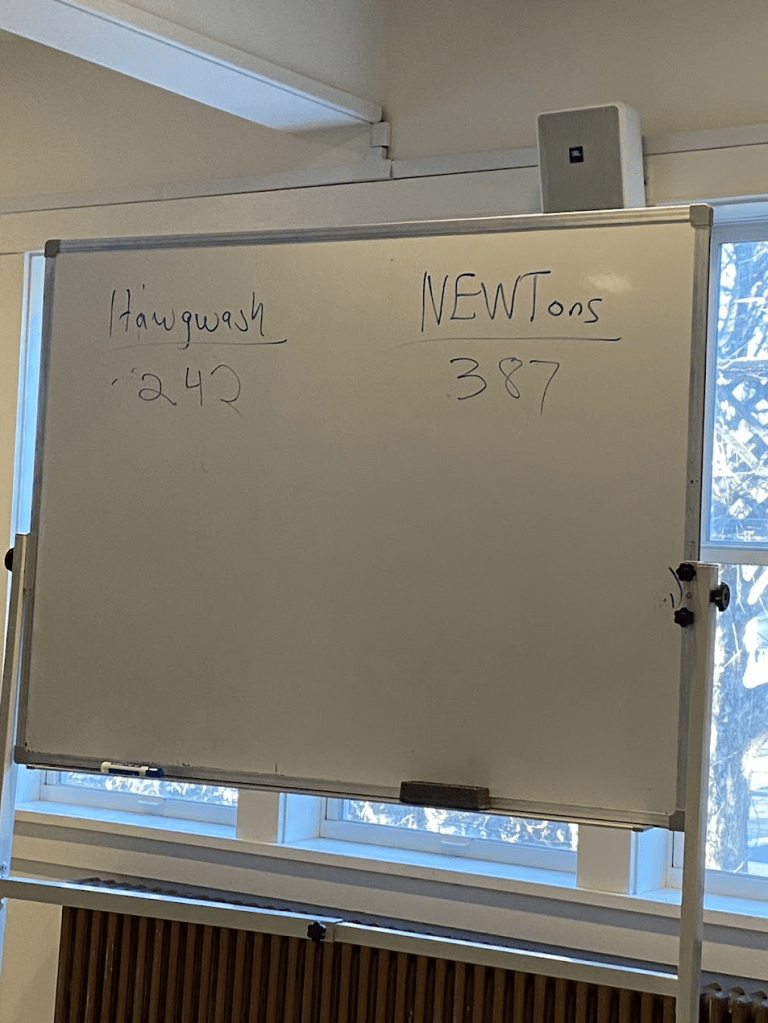
“I am a visual learner and Nick makes good use of the three (!!) whiteboards we have at Teen Day to show everything either written out or as a picture; I think that helps everyone in the class understand the material better.” – Juliet A.

At TEEN DAY, Calculus is offered as a dual enrollment course, meaning students may opt into earning college-level credits while simultaneously earning high school credits. If students choose this option, they may save time and money in the future, in addition to increasing their college readiness.

Regardless of a student’s decision to earn college-level credits, they’re receiving the same education as all other students in the class. In the first half of the course, students focused their efforts on derivatives— the rate of change of a function in relation to a variable. Currently, students are learning about integrals— a tool used to determine volumes, areas, and other quantities. The core principle of calculus is the connection between those two concepts.

Nick LaVigne, the instructor for this class, has a background in applied mathematics and currently works as a machine learning engineer at Ursa Space Systems. His work primarily focuses on Synthetic Aperture Radar satellite imagery. He is more than qualified to teach this course and get students interested in calculus.

“I’m trying to frame the course in a way that points to the wonder and beauty of mathematics rather than just a handful of problems to solve.” – Nick L.
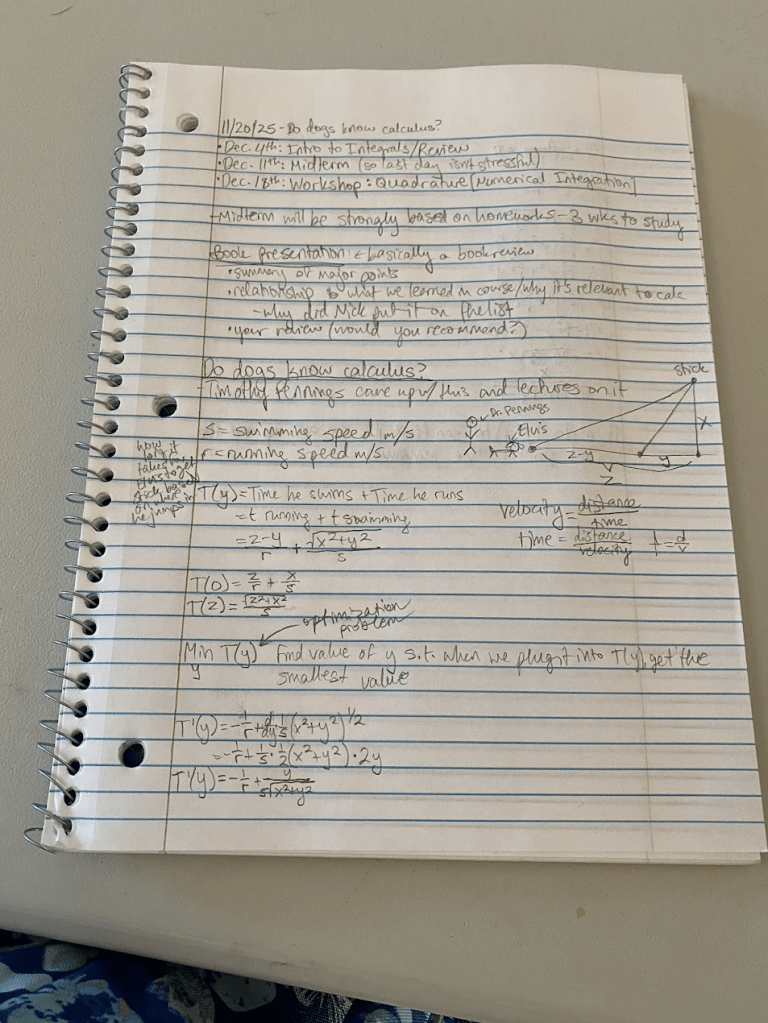
“One fun thing is that during some classes we watched videos showing some interesting applications of what we’ve learned, and we also got to pick one math themed novel to read and write a book report about to present by the end of classes.” – Asher V.

He structures his classes so that students can work on interactive lectures, homework, quizzes, and various other workshops while at TEEN DAY. At home, he encourages students to explore and play around with online resources to understand complex subjects better, but doesn’t allow students to use these resources or a calculator on graded work, such as tests and quizzes. This also increases the accessibility of his class. Calculators (specifically, the TI-84) are expensive, and with access to more powerful tools online, there is no need to purchase one.

Lastly, it is important to note the math schedule at TEEN DAY. There are two distinct levels of math offered at a time. Each has a three-year rotation cycle. Calculus is part of the Upper-Level Math rotation and consists of Precalculus, Calculus, and Statistics (the latter two are offered for dual enrollment through Tompkins Cortland Community College). This year, Calculus is being offered, which means next year Statistics will be offered, and Precalculus the year after that.

Courses are offered in this way so that students have more academic options available to them. They’re not confined to a specific mathematical advancement, and can take the courses that make the most sense for them. Having a three-year cycle allows for more flexible scheduling. It also allows students to take two separate math classes at a time (an Upper- and Lower-level course), if they choose.
Earth Science

“Earth [is] a complex, constantly changing, “living” system, and something [we] are already part of and can help protect.” Amanda Gray

Earth Science is a large topic that can be understood most basically as any science that has to do with the Earth. This includes geology, meteorology, astronomy, and more. The Earth is a complex and interconnected system that is constantly changing. In this class, students are learning that not only does the Earth evolve on its own, but their actions affect the planet.

“I find the class interesting and we have done some really fun labs.” — Emmett G.

Every class, students are tasked with bringing in a relevant news article about earth science and then to discuss them. This emphasizes the fact that this science is not just something to study but rather is actively taking place, and everybody is contributing to it. This takes the student’s learning outside of the classroom and applies it to the real world, with real-world examples.

Amanda Gray is the teacher for this course, and she is extremely enthusiastic about it. She works as a math and science tutor at Tompkins Cortland Community College (TC3) and has previously taught various math and science courses at TEEN DAY Ithaca. This is her first year teaching Earth Science, but she has naturally come across similar topics in her other courses. Her goal is to make math and science accessible and fun for everybody involved.

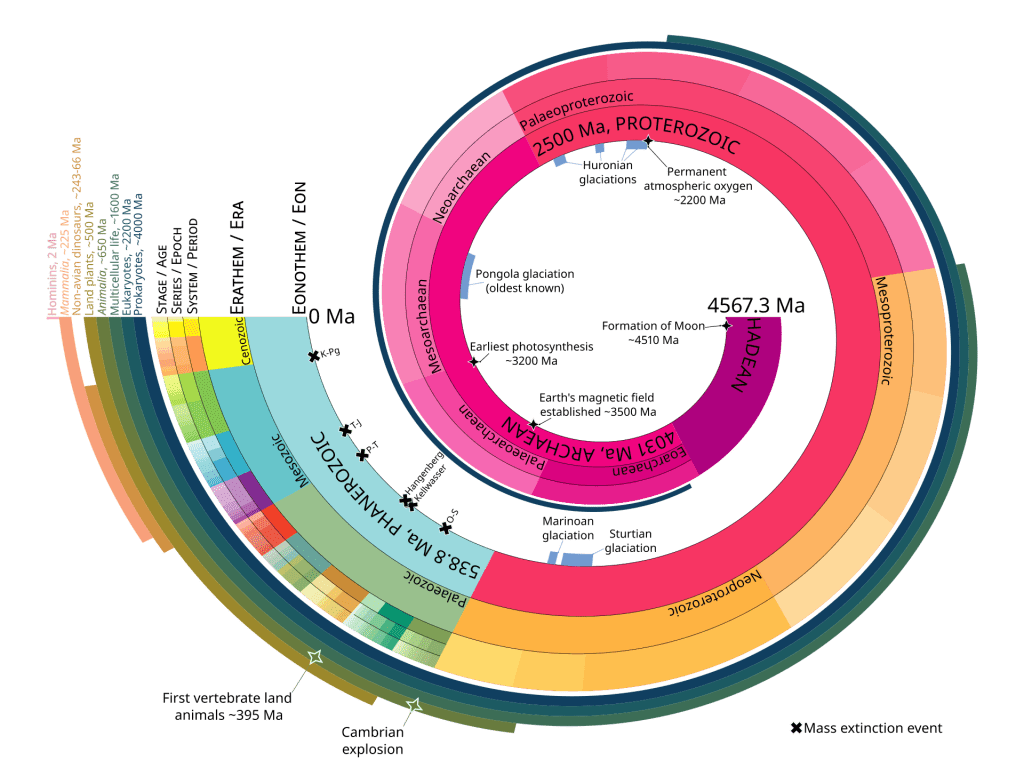
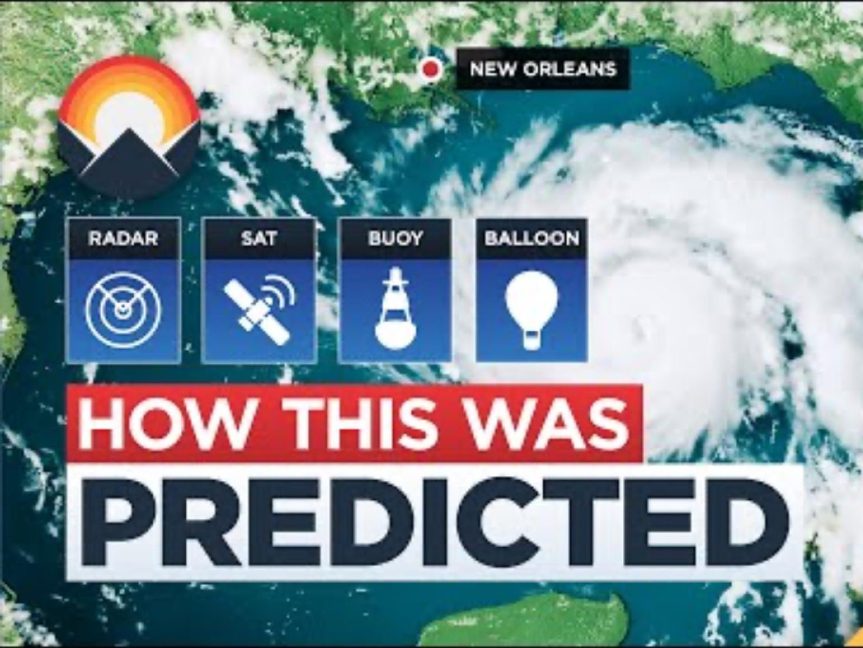
Students have already learned about the scientific method, geologic time, rock types, plate tectonics, and the water cycle. They will explore new topics as the year continues, such as meteorology, oceanography, astronomy, and environmental science. An advantage to learning about these topics at TEEN DAY is that the class can slow down for complicated concepts or if those interested are especially interested in a specific topic.

Another key aspect of this course is the labs and presentations. Labs present students with hands-on, tactical learning. TEEN DAY’s lab equipment is used alongside household items and everyday materials, highlighting the accessibility of earth science study. Students present on topics like minerals, water quality, and natural disasters. The goal of these presentations is to connect the concepts they have learned in class to real places and stories. This, again, highlights how these are things that students aren’t just learning in a textbook, but rather are real and applicable in the real world.

“I enjoy the class, and my favorite thing about it is at the beginning when we all share Earth science news stories, because I get to learn a little about what’s happening in science right now” — Walter H.