

Calculus is commonly known as the entry point for upper-level mathematics used in college and various jobs. It lays the foundational concepts used in many more advanced practices.
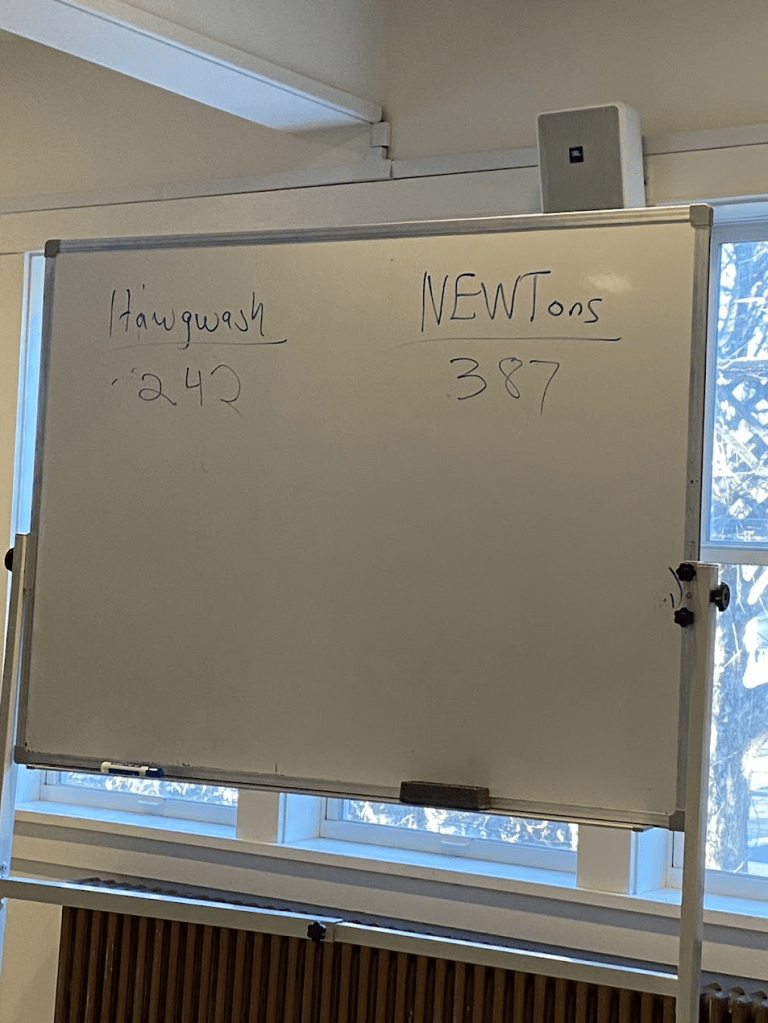
At TEEN DAY, Calculus is offered as a dual enrollment course, meaning students may opt into earning college-level credits while simultaneously earning high school credits. If students choose this option, they may save time and money in the future, in addition to increasing their college readiness.
Regardless of a student’s decision to earn college-level credits, they’re receiving the same education as all other students in the class. In the first half of the course, students focused their efforts on derivatives— the rate of change of a function in relation to a variable. Currently, students are learning about integrals— a tool used to determine volumes, areas, and other quantities. The core principle of calculus is the connection between those two concepts.
Nick LaVigne, the instructor for this class, has a background in applied mathematics and currently works as a machine learning engineer at Ursa Space Systems. His work primarily focuses on Synthetic Aperture Radar satellite imagery. He is more than qualified to teach this course and get students interested in calculus.
“I’m trying to frame the course in a way that points to the wonder and beauty of mathematics rather than just a handful of problems to solve.” – Nick L.
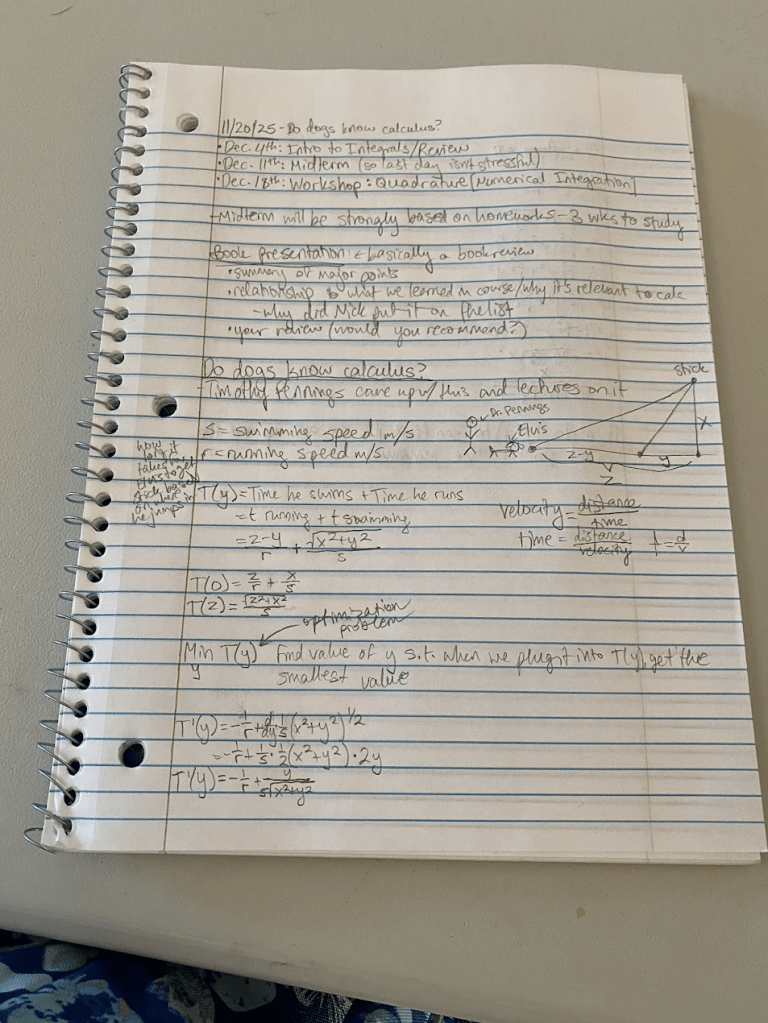
He structures his classes so that students can work on interactive lectures, homework, quizzes, and various other workshops while at TEEN DAY. At home, he encourages students to explore and play around with online resources to understand complex subjects better, but doesn’t allow students to use these resources or a calculator on graded work, such as tests and quizzes. This also increases the accessibility of his class. Calculators (specifically, the TI-84) are expensive, and with access to more powerful tools online, there is no need to purchase one.
Lastly, it is important to note the math schedule at TEEN DAY. There are two distinct levels of math offered at a time. Each has a three-year rotation cycle. Calculus is part of the Upper-Level Math rotation and consists of Precalculus, Calculus, and Statistics (the latter two are offered for dual enrollment through Tompkins Cortland Community College). This year, Calculus is being offered, which means next year Statistics will be offered, and Precalculus the year after that.
Courses are offered in this way so that students have more academic options available to them. They’re not confined to a specific mathematical advancement, and can take the courses that make the most sense for them. Having a three-year cycle allows for more flexible scheduling. It also allows students to take two separate math classes at a time (an Upper- and Lower-level course), if they choose.
 TEEN DAY Ithaca